
Why Medieval Welsh Literature Still Inspires My Novels
Inspired by Joseph Biddulph’s “Among Welsh Medievals: The Literature of Totality”
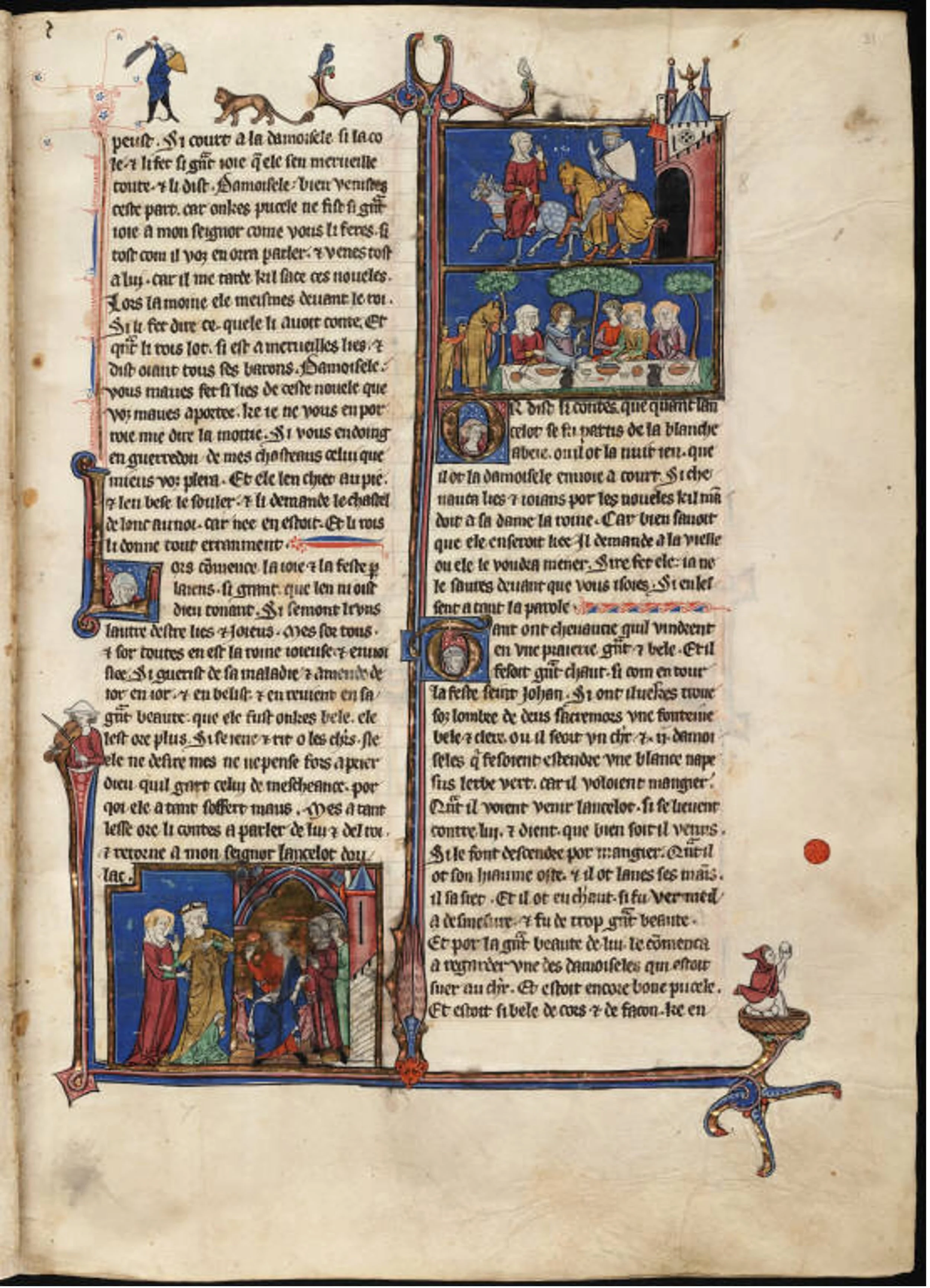
A page from a late-thirteenth-century Arthurian romance manuscript, filled with scenes, colour and ornament. Public domain; Beinecke Rare Book and Manuscript Library, via Wikimedia Commons.
One of the questions I’m often asked is why I’m so passionate about medieval Wales.
The answer lies partly in the history but equally in its extraordinary literature.
Long before modern novels existed, Welsh poets and storytellers were creating works filled with political intrigue, romance, humour, family loyalties, breathtaking descriptions of nature and unforgettable characters. Reading them today, it is easy to realise that people eight or nine hundred years ago loved many of the same things we do.
Joseph Biddulph’s ‘Among Welsh Medievals: The Literature of Totality’ goes some way to explaining this richness. His work has helped me appreciate not only what medieval Welsh writers created, but how differently they saw the world.
Life Was Never Divided into Little Boxes
Today we tend to separate history from fiction, religion from romance, politics from family life, and humour from serious subjects.
Medieval Welsh writers did not.
Biddulph describes their work as a “literature of totality” so a literature that embraced every aspect of life. A single poem or tale might move effortlessly between prayer, love, birdsong, battle, genealogy and laughter because medieval people believed these belonged to the same created world.
That outlook has influenced my own writing. When I write about Gruffydd ap Cynan, Gwenllian, Angharad or Cadwgan ap Bleddyn, I do not want them to feel like historical figures trapped inside a textbook. They were husbands and wives, parents and children, rulers and rivals, capable of deep faith, fierce love, quick wit and terrible mistakes all at the same time.
Wales Was Never Cut Off from Europe
There’s a persistent myth that medieval Wales existed in splendid isolation.
The evidence tells a different story.
Welsh storytellers knew the great Arthurian legends, shared stories that travelled across Europe and adapted ideas that also appeared in France, Ireland, England and beyond. At the same time, Welsh traditions shaped what later became known as the Matter of Britain, influencing Arthurian literature throughout Europe.
When readers tell me that my novels feel “cinematic” or “epic,” I am pleased because they are sensing this wider world. Medieval Wales was never simply a small kingdom on Europe’s edge but part of a much bigger story.
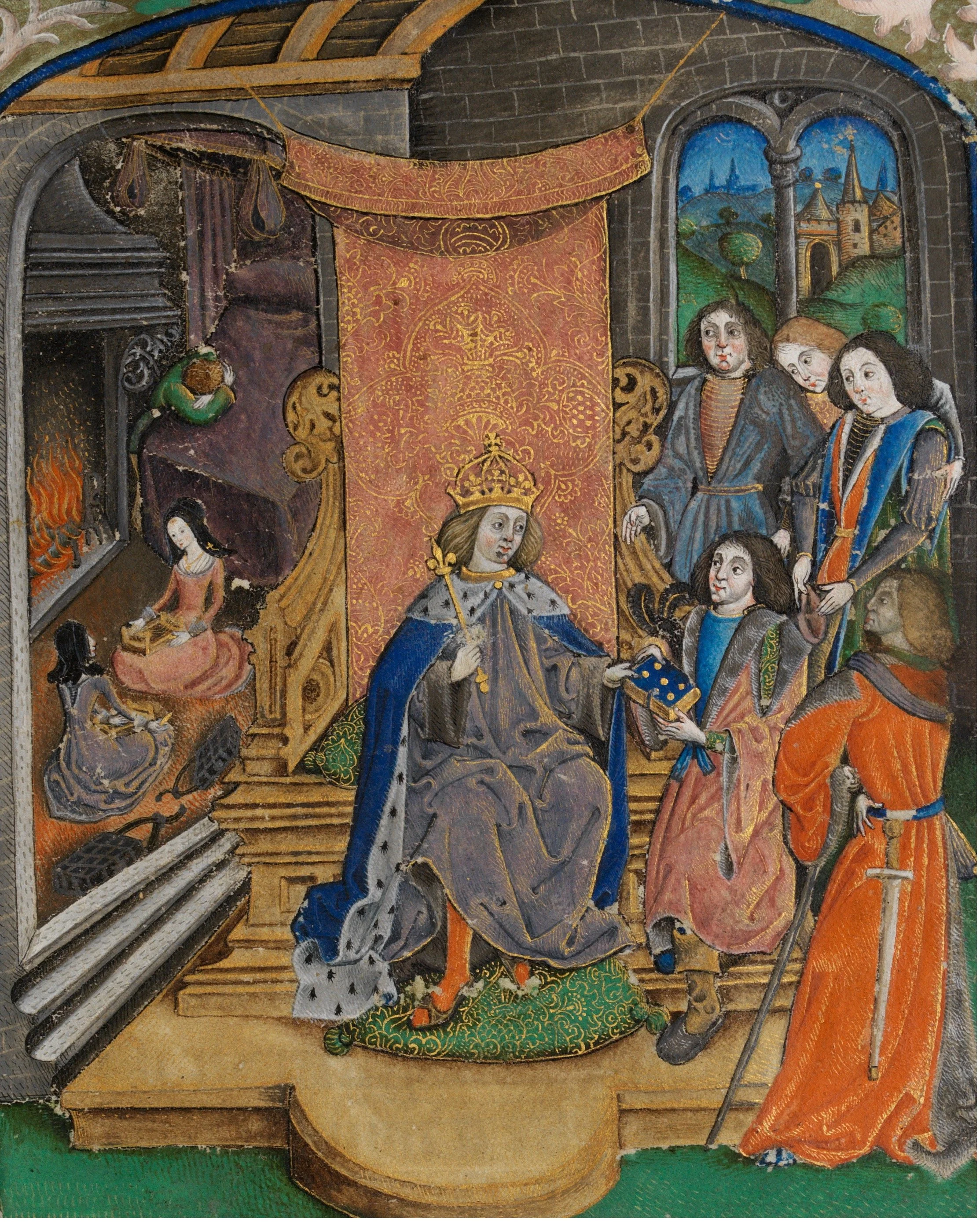
A richly coloured presentation of a book to a king, from the Vaux Passional (Peniarth MS 482D). CC0; National Library of Wales, via Wikimedia Commons.
Beautiful Language Was an Art Form
Modern readers often prefer spare prose and getting quickly to the point, but Medieval audiences delighted in something quite different. They admired rich description, carefully crafted speeches and language that sang.
The goal wasn’t simply to tell a story but to tell it beautifully.
This is especially true in Welsh poetry through the remarkable system known as cynghanedd, where patterns of sound, rhyme and consonants create music within the verse itself. Although this extraordinary technique cannot truly be reproduced in English, its beauty reminds me that words should do more than convey information: they should create atmosphere.
Whenever I describe a winter dawn over Gwynedd, moonlight on frost-covered fields or the sound of horses crossing the hills, I hope to capture a little of that medieval delight in language itself.